


Imagine a new manufacturer suddenly entering the automotive world, offering the performance of a Bugatti, the comfort of a Rolls-Royce, and the price of... well, the price of a cup of coffee at the gas station. And you wouldn't need a driver's license to drive this vehicle, just one finger and a bit of imagination. That's exactly what happened in the music industry. While the great dinosaurs were squabbling over copyright, Suno AI was going full throttle. Rick Beato, the music guru, says the race is already over. And you know what? I think he's right. Buckle up.
Artificial intelligence

We've been waiting for it like children wait for presents, except that this holiday has been postponed for a whole decade. Tesla's Full Self-Driving (FSD) system is a revolution in the US, but a forbidden fruit in Europe. But the ice is finally breaking. With new regulations and testing on European soil, February 2026 looks like the moment when we'll finally hand over the wheel to silicon. Buckle up, we'll analyze the technology, bureaucratic obstacles and that strange feeling when the car knows where you're going better than you do. So - Tesla FSD and Europe.

SUNO AI is no longer just a music generation tool. It’s becoming a complete cloud studio that allows users to create, design, and enhance songs at a level that was reserved for professional producers just two years ago. But don’t be fooled — this isn’t just a technological innovation, it’s a cultural shift.

So, if you've ever found yourself in that late December moment of panic – “What should I buy Aunt Milena, who already has everything?” – OpenAI has a new solution for you: shopping research. The feature is available to all ChatGPT users – free and paid – on mobile and web. Yes, even those with the basic version will have almost unlimited access – at least for the duration of the holiday shopping season (read: until we die under the weight of gift lists). So – ChatGPT will be your personal shopping advisor.

Google has just released Gemini 3, its smartest AI model yet, promising better understanding of complex questions, cutting-edge coding, and interactive visualizations. It’s available right now in the Gemini app and search engine, and users on social media are praising its speed and usability — though some have pointed out its occasional laziness. It’s a new step in the battle with OpenAI and Anthropic, where AI is evolving faster than ever.

Imagine this: you open your laptop, click on the taskbar, and instead of you hunting through folders like a digital archaeologist, your computer sends a real AI agent to work. It goes, researches, edits, sends emails, and leaves you to sip your coffee in peace. Does this sound like science fiction from 1999? Microsoft says, “Hold my beer—or rather, hold my NPU.” AI agents are coming.

In a conversation about the future of Tesla's humanoid robot Optimus, Elon Musk confidently revealed his vision of a world where every home has its own C-3PO. The path to getting there includes video learning, child's play, and the million robots Tesla plans to produce by the end of the decade.

At a time when technology promises to make life easier, here comes 1X Neo, a humanoid home robot that is set to take over tedious tasks like cleaning and laundry. With artificial intelligence and a soft design, it aims to become more than just a machine – a true family member. But is it really ready for the real world? Let's check it out.

General Motors reports that their hands-free driving system has more than half a million active users, and the safety record is downright impressive: 0 accidents in more than 700 million kilometers.
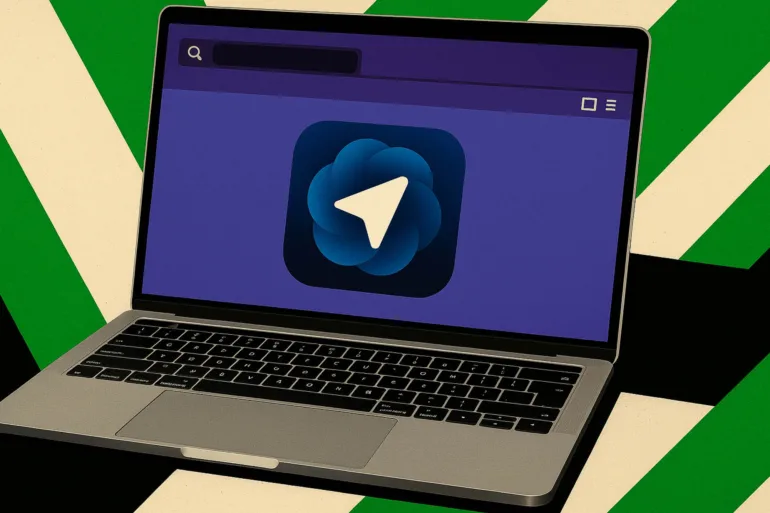
OpenAI has just launched a rocket into the heart of web browsing – a new browser that combines artificial intelligence with classic surfing, and in doing so, Google is warning that it's time to upgrade.

Windows is changing – from an operating system to a digital partner with artificial intelligence. Are you ready to tell your computer, "Do what you want"?

The next generation of AI will no longer be a single omniscient system, but a network of smaller, specialized models – so-called “nano agents” – connected by an orchestrator. How does this work, where is it already in use, and why is it a step closer to human intelligence?