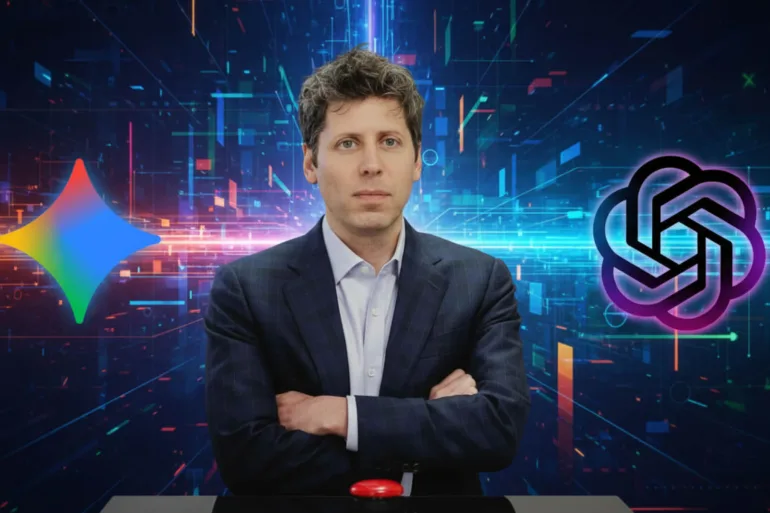
Google has just released Gemini 3, its smartest AI model yet, promising better understanding of complex questions, cutting-edge coding, and interactive visualizations. It’s available right now in the Gemini app and search engine, and users on social media are praising its speed and usability — though some have pointed out its occasional laziness. It’s a new step in the battle with OpenAI and Anthropic, where AI is evolving faster than ever.
ai
Imagine this: you open your laptop, click on the taskbar, and instead of you hunting through folders like a digital archaeologist, your computer sends a real AI agent to work. It goes, researches, edits, sends emails, and leaves you to sip your coffee in peace. Does this sound like science fiction from 1999? Microsoft says, “Hold my beer—or rather, hold my NPU.” AI agents are coming.
At a time when technology promises to make life easier, here comes 1X Neo, a humanoid home robot that is set to take over tedious tasks like cleaning and laundry. With artificial intelligence and a soft design, it aims to become more than just a machine – a true family member. But is it really ready for the real world? Let's check it out.
Imagine an electric SUV with the heart of a rocket, futuristic technology, and a price tag you'd expect from an old hatchback - the Leapmotor C10 with its 800-volt architecture is here to shake up the world.
Windows is changing – from an operating system to a digital partner with artificial intelligence. Are you ready to tell your computer, "Do what you want"?
The next generation of AI will no longer be a single omniscient system, but a network of smaller, specialized models – so-called “nano agents” – connected by an orchestrator. How does this work, where is it already in use, and why is it a step closer to human intelligence?
Figure has unveiled the Figure 03 humanoid robot, designed for real-world work in the home. With an advanced battery, intelligent Helix system, and sleek design, it aims to become the first useful robot for everyday household help.
In a world where AI promises everything from quick answers to creative outbursts, Grok and ChatGPT clash like two old rivals. One is a reliable giant with a huge market share, the other a witty challenger that excels at smaller languages, speed, and informality. As a writer who simultaneously drives both due to the nature of my work, I find that Grok excels at identifying news sources and writing with less fragmented, more natural responses. Based on data from October 2025, personal experience, and tests, we reveal why Grok is not just an alternative, but often a better choice for everyday users—with the irony that it’s cheaper and less rigid.
YouTube Music is experimenting with AI DJs, promising an "enriched" music experience with interstitial commentary and trivia. But users are far from enthusiastic — complaints are rife online that no one asked for a digital chatterbox to interrupt a perfect playlist. Is this the future of music streaming, or just another Google idea that will end up in oblivion?
Nvidia and OpenAI have entered into a partnership that is expected to see an incremental investment of up to $100 billion over the next few years. The goal is to build a massive infrastructure with at least 10 gigawatts of computing power, which will enable training of the next generation of artificial intelligence models. The market reacted quickly: Nvidia shares rose more than 4% on the news.
Mate Rimac, the Croatian Elon Musk (with fewer tweets and more actual prototypes), is shaking up the automotive world again. His prediction: the car of the future will be a luxury, reserved for romantic nostalgic souls who still dream of the smell of gasoline and the screeching of tires. Most will simply click on the app and take a ride in a robotaxi – without the hassle, without the fines and without the eternal question: “Where the hell did I park?”
In a world where artificial intelligence is already taking over our jobs, chatting with us like old friends and occasionally making up facts, the internet has come up with a new, rather spicy way to express frustration. Meet the "clanker" — a term that sprung from Star Wars and is now synonymous with anything that annoys us about AI. And yes, if you ask ChatGPT, it might think you're talking about old British slang for metallic sounds. How ironic, right?