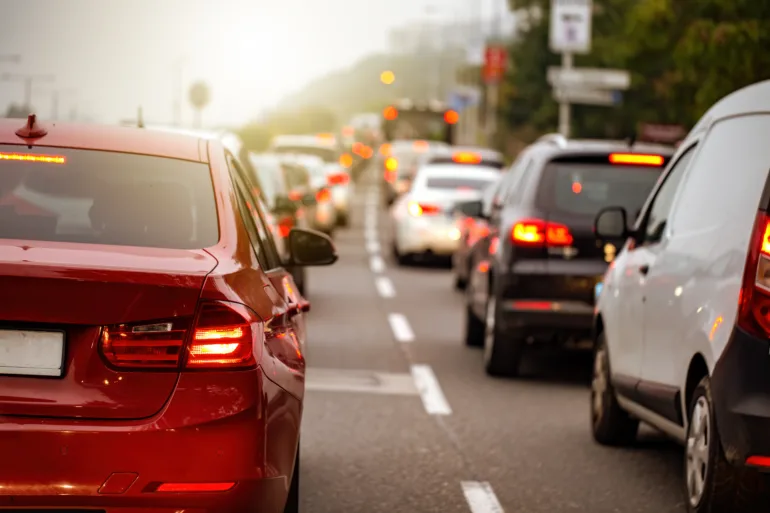
The year is 2026. While DARS and government buildings are still sweating with excitement over the drawing of a third lane on the Styrian motorway and dreaming of hectoliters of new asphalt on the same route, which has already been dug up a hundred times, I have the unpleasant feeling that I am watching a repeat of a very bad historical drama. This national enthusiasm of ours for the expansion of the motorway at a time when technology is redefining the very essence of movement is exactly as if in 2007, just a day after Steve Jobs showed the world the first iPhone, the Nokia board of directors had called a crisis meeting, at which they would have decided with all seriousness and strategic enthusiasm how to squeeze two additional keys onto the physical keyboard for faster typing. A completely missed point that will serve as an example of expensive myopia in economics textbooks. The third lane of the motorway is a way back in time. Let me explain why!
traffic
Speed-free motorways in Germany are synonymous with every driver's adrenaline-pumping dream. But the latest data from 2025 reveals that the legendary Autobahn is increasingly resembling a regular highway. Has the freedom of speed become just a myth? So - Germans on speed-free motorways in 2025!
Is Tesla light years ahead of the rest? What's more, what does this mean for the future of autonomous vehicles, where Tesla cars are already collecting invaluable driving data? You are invited to ride into the future, which is already happening.
If you have driven on Slovenian highways in recent years, you must have noticed that the traffic is becoming more and more dense and often burdened with traffic jams. We've all had those embarrassing moments when we're driving at a snail's pace on the freeway while brass horns blare impatiently in the background. So why are there traffic jams on Slovenian roads? The answer is surprisingly simple: our traffic culture and inadequate speed control measures, not, as many think, traffic congestion. So - why do we have traffic jams on Slovenian highways?
Summer brings relaxation, but riding in light footwear like flip-flops can be dangerous. Wondering if driving in flip-flops or even barefoot is illegal? We checked the rules across Europe and found out where you can be fined and where you can only be warned.
While most countries drive on the right, some countries have had the rule of driving on the left side of the road for many years. Curious about the explanation behind it?
The online platform Airline Ratings has published a report of the most reliable airlines. Is your favorite on the list?
Experts believe that the key to peaceful driving lies in maintaining a sense of what is under our control and what we cannot control. Strategies for reducing tension also contribute significantly to this.
Someone yelling at you from the car? He is definitely one of them.
Women are better drivers than men, and judging by the risk they pose in traffic, even twice as good!
Cities are changing their image mainly due to the ever-increasing number of inhabitants. Urban planners thus have their hands full, as the infrastructure must be constantly adapted to the needs of the times. Those best dogs try to be even one step ahead of him. Larger cities with rivers running through them have an added challenge, bridges. Bridges connect banks, we also like to attribute symbolic value to them. But in cities they also have to "open the door" to river traffic. Let's take a look at 10 stunning drawbridges.
The legendary double-decker buses in London are stealing the limelight these days with Harry, a self-driving bus that transports passengers without the presence of a driver. Over the next few weeks, around 100 local residents living near the O2 arena will test drive the prototype vehicle in East London, in the Greenwich area, home to, among other things, the famous astronomical observatory and through which the Prime Meridian (Greenwich Meridian) passes.