


Volkswagen is at a turning point. After several years of searching for an identity in the electric age, criticism of the software and ergonomic slippages in the interior, it seems that the German giant is returning to what it has always done best: making cars for people. In sunny Portugal, the Volkswagen ID. Cross 2026 concept was revealed to selected eyes – a car that promises to correct the mistakes of the past.
Volkswagen has revealed its future in sunny Portugal. Not with promises of autonomous driving or space-like acceleration, but with something much more down-to-earth and important: a return to common sense. Concept Volkswagen ID. Cross 2026, which heralds a production model for 2026, is a tacit admission from Wolfsburg that they may have strayed from the path in recent years – and are now getting back on track.
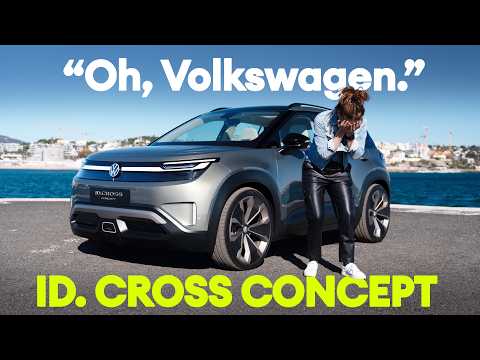
Since Slovenian media were not invited to this exclusive insight, we have dissected and synthesized for you the reports of two of the most important independent sources that had access to the vehicle: the German analytical channel Car feeling and British ElectrifyingTheir conclusions are clear: Volkswagen has stopped “digitally bullying” its customers.


Design: The end of the “Audi fiasco” and the return of sincerity
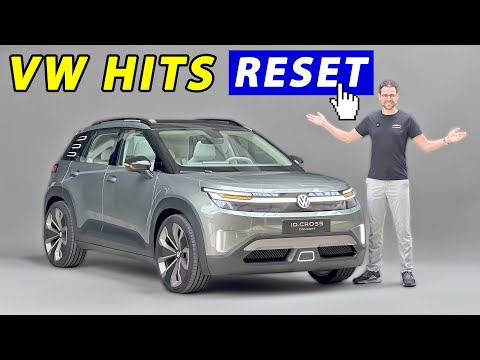
Looking at the exterior, the 2026 Volkswagen ID. Cross (which will likely be called the ID.2 X or simply ID. Cross) acts as an electric spiritual successor to the T-Cross. Thomas from Autogefühl called the design “sincere and German”, which is a huge compliment in his eyes. After years of searching for a design identity with the ID.3 and ID.4 models, this car feels solid, simple and instantly recognizable.
What from the concept will actually be on the road?
VW's head of exterior design confirmed that 80 to 90 %s are seen ready for series production.
View this post on Instagram
-
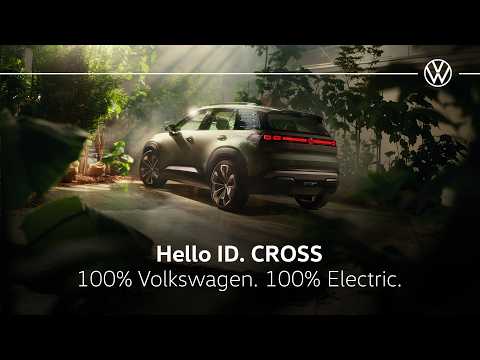
Classic hooks: The biggest surprise and relief. VW has abandoned the expensive and problematic sunken door handles in winter and returned to robust, classic handles. Function triumphs over form.
-
Light signature: The illuminated logos on the front and rear remain. The rear wiper also remains, which has become a rarity in modern electric cars (due to aerodynamics), but is crucial for safety.
-
Wheels: The concept's 21-inch wheels are too large for series production (and too heavy to install), so the series maximum will be 20 inches.
Interior: The Revolution of Normality
The most important story of the ID. Cross takes place in the cabin. It is the first physical evidence of VW's new strategy, which is: “We listened to you.”


1. Return of physical buttons
The era of touch sliders, which were invisible at night and dangerous to use while driving, is coming to an end.
-
Steering wheel: The spokes of the steering wheel are back real physical buttons, which click when pressed.
-
Air conditioning and sound: There's still a touch bar (this time illuminated) below the central display, but the key climate control and volume functions have been given physical rotary switches or buttons at the bottom of the console.
-
Windows: VW has abandoned the infamous two-switch system with a “Rear/Front” toggle. Each window has its own switch again.
2. Materials: The Death of Piano Polish
Both reviewers welcomed with near enthusiasm the absence of the shiny black plastic (Piano Black), which has been a trademark of recent VW models. Instead, the interior is adorned with fabrics, soft materials and textured surfaces, which give the feeling of a living room rather than cheap electronics. Ginny Buckley (Electrifying) highlighted the feeling of warmth and homeliness that these materials bring.
3. Cute details
VW wants to be “people-friendly” and cute again. They have therefore left space in the center console for a vase (or pen/tool holder), which is a direct homage to the legendary Beetle. The gas and brake pedals retain the “Play” and “Pause” symbols.

Space: The Magic of the MEB Entry Platform
ID. Cross is placed on a new platform MEB EntryThe key difference compared to previous electric VWs is front-wheel drive (FWD). With the engine no longer under the trunk, a huge amount of luggage space has been freed up.
-
Trunk: Measures 450 liters. This is an impressive figure for a car that is 4.16 meters long. The trunk is deep and has a regular shape. There is also additional space under the floor for cables or smaller items.
-
Flexibility: The option of completely folding all seats, including the passenger seat, is indicated. This allows the transport of objects over 2.2 meters long - or the creation of a "sleeping" space for adventurers, which was clearly demonstrated with a completely flat floor.
-
Passenger cabin: Despite the compact exterior dimensions, there is enough knee room in the rear seat for adults, as the wheels are pushed into the extreme corners of the body.
Technical data: What's hiding under the sheet metal?
Although the car has not been seriously driven, the technical parameters for the production model in 2026 are already known and promising:
| Specification | Data |
| Drive | Front-wheel drive (FWD) |
| Engine power | Up to 155 kW (211 hp) |
| Battery (Standard) | ~38 kWh (LFP chemistry for lower price) |
| Battery (Long Range) | ~56 kWh (NMC chemistry for range) |
| Range (WLTP) | The goal is 425+ km (with a larger battery) |
| Charging | 11 kW AC / fast DC (10-80% in approx. 20 min) |
| Towbar | Up to 1,200 kg towing capacity / 75 kg vertical load |
It is worth emphasizing that tow hitch It allows the transport of two heavier electric bikes, which (according to VW representatives) was one of the most common requests from dealers and customers.
When and for how much?
ID. Cross will be launched in the summer 2026.
When it comes to pricing, Thomas from Autogefühl remains realistic. Although marketing will probably start with a promise of a price of around 28.000 € (for the base model with a smaller battery and less equipment), the realistic price for what most people want (56 kWh battery, heat pump, better equipment) will probably be closer to 38.000 €.
Conclusion: Volkswagen ID. Cross 2026
The Volkswagen ID. Cross 2026 is not a technological revolution in the sense that it would fly or drive itself. But it is a revolution in brand thinkingWith this model, VW recognizes that progress doesn't necessarily mean removing all buttons and replacing fabric with plastic.


If the production model retains the ergonomics, materials, and space utilization of this concept, VW has a model on its hands that can worthy replace the popular T-Cross and T-Roc and offer a serious alternative to the Ford Puma and the upcoming Renault 4. It seems that Volkswagen has finally found its compass again.

