


Most people would order a cocktail on a private island when they saw a bank account that exceeds the GDP of most European countries. Jensen Huang? He checks his email at 4am, sweating with anxiety. Welcome to the mind of the man who drives your future.
Imagine you're the captain of a ship that just became the most expensive in the world. Your engines power the entire global economy, from artificial intelligence to your smart refrigerator. It would make sense to light a cigar and enjoy the view, right? Not if you're Jensen Huang. Founder and CEO of the company Nvidia is in a recent appearance on the podcast The Joe Rogan Experience admitted something that sounds like a diagnosis, not a business strategy: he's running a $5 trillion company (yes, you read that right, $5 trillion) as if it's going to go bankrupt in exactly 33 days.
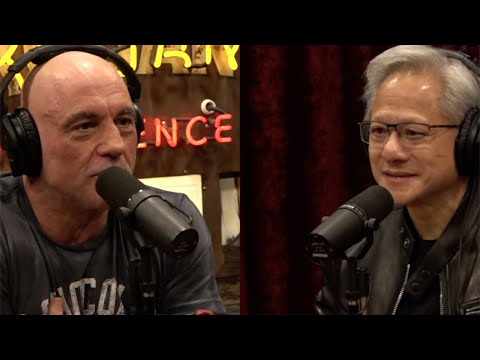
The Paradox of Success: When Fear Drives You Faster Than Greed
Jensen Huang He's not your typical tech billionaire who sells us stories about "work-life balance." His philosophy is much more brutal and, frankly, refreshing in its honesty. Despite Nvidia surpassing the $5 trillion market cap and becoming the most valuable company in history, Huang says the feeling of uncertainty never ends.
“You know that phrase '30 days to failure' that I've been using for 33 years? The feeling doesn't change. The feeling of vulnerability, insecurity, and threat never leaves you,” Huang said.
It sounds exhausting, and according to him, it is. He admitted that he lives in a “state of constant anxiety.” While we dream of weekends, Jensen works 7 days a week. Every day. Without exception. Even on Christmas and Thanksgiving. His workday starts when most of us are still fast asleep – at 4:00 AM.
This isn't just workaholism; it's a survival instinct turned on at 11,000 rpm.
History Lesson: How Sega Saved Nvidia
To understand this paranoia, we need to go back in time. Huang's anxiety is not imaginary; it is a scar from the 1990s. Nvidia was on the verge of collapse at the time. They were developing a chip for the Sega console when they realized their technological architecture was flawed. They were at a dead end, and money was running out.
Huang had to do the unthinkable: he flew to Japan, admitted to the Sega CEO that their product wouldn't work and that they had to end the deal, but at the same time asked if Sega could still pay them the remaining $5 million so that Nvidia wouldn't go bankrupt.
Surprisingly, Sega agreed. That $5 million was the fuel that allowed Nvidia to survive another day and eventually create an empire that today powers ChatGPT, autonomous vehicles, and probably the simulation we live in.
Suffering as an ingredient for success
Huang's philosophy of education and leadership is in stark contrast to the modern "everything will be fine" approach. He once wished Stanford students "a generous dose of pain and suffering." It sounds sadistic, but in his world, that's love.

“Suffering is part of the journey. You will appreciate those awful feelings when things aren’t going well. You will appreciate them even more when things are going well,” Huang says.
For him, the key to resilience is a low threshold of expectations and high pain tolerance"The fear of failure drives me more than the desire for success or greed," he admitted to Rogan. It's an engine that doesn't have an off switch.
Family business: The “work gene” is hereditary
If you thought his kids were immune to their father's work ethic, you'd be wrong. Both of his kids, Madison and Spencer, are employed by Nvidia. And no, they're not just there for decoration.
The story is interesting: Madison went to culinary school, and Spencer studied marketing and even opened a cocktail bar in Taipei. But the pull of their father's empire was too strong. They started as interns and worked their way up. Today, in their 30s, they work every day, just like their father.
“Now we have three people working every day, and they want to work with me every day, so that’s a lot of work,” Huang joked. Apparently the apple doesn’t fall far from the tree, especially when that tree grows in Silicon Valley.
Conclusion: The price you pay for the top
Jensen Huang is proof that behind extreme success often lies an extreme personality. His story is not a romantic fairy tale about a genius who achieved everything with ease. It is a story of grit, paranoia and inhuman sacrifice.
While we admire the numbers – $5 trillion market cap, dominance in the AI sector, and world-changing technology – Jensen Huang sees only 33 days until potential bankruptcy. Perhaps it is this “healthy” dose of madness that separates the visionaries from the dreamers.
Would you trade your life for his? Billions in your bank account in exchange for waking up at 4am with a lump in your throat? Most would say no. But maybe that's why he's where he is, and we only read about him. And honestly, as long as his chips are powering our video games and AI assistants, I'm glad he's the one who's awake.

