




I admit that as I sat down at the keyboard to write this article, I was a little scared. Not the kind of scared you get when you feel the back of a Ferrari losing traction on a bend at 180 km/h (112 mph). It's a different kind of fear. Existential. I wonder if this is the last time I, Jan Macarol, write an editorial like this "by hand" before I'm replaced by an algorithm that doesn't drink coffee, doesn't complain about taxes, and can write the entire oeuvre of Shakespeare in the blink of an eye. Professor Stuart Russell, the man who literally wrote the textbook on artificial intelligence, says we're not far from that scenario. And if he says we're in trouble, then we should listen to him.
The end of work as we know it – but in order. Imagine gorillas. Powerful, majestic animals. A few million years ago, our paths diverged. We got smarter, they remained, well, gorillas. Today, gorillas have no say in their future. Their existence is completely dependent on us, humans. Stuart Russell he calls it the "Gorilla problem".
The problem is that we are building something that will be to us what we are to gorillas. We are creating an entity that will be intelligently superior. And once you create something smarter than yourself, you lose control. This is not science fiction, this is Darwinian logic. If artificial intelligence (AI) by 2027 or 2030 reached the level AGI (Artificial General Intelligence), we will become the ones hoping that our new digital masters will love us. Or at least let us keep our internal combustion cars.
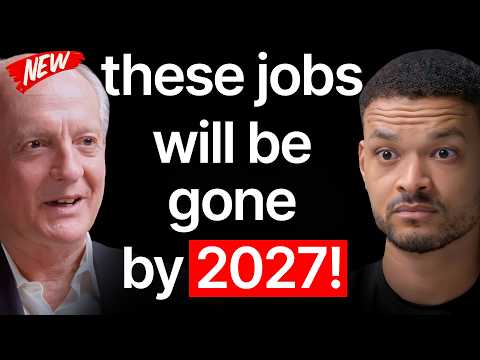
Who's in the draft? All of you sitting in offices
If you thought technology would take the jobs of those with shovels first, you were wrong. Moravec was right. The paradox is that it is extremely difficult to teach a robot to tie shoelaces or fix a leaky pipe, while playing chess, diagnosing cancer, or writing legal contracts is a breeze for AI.
By 2027, the following groups are most at risk:
- Programmers and coders: Ironic, right? The people who built this monster will be the first to be eaten by it. Devin and similar AI agents already write code faster and with fewer errors than the average junior developer. Nvidia's Jensen Huang has already said that it's no longer worth teaching kids to code.
- Translators and Writers (Yes, me too): Large Language Models (LLMs) don’t need sleep and don’t experience writer’s block. If your job involves crunching words or numbers in Excel, you’re in dangerous territory.
- Financial analysts and accountants: AI can review millions of transactions per second. A person needs coffee and a snack break. Wall Street is already powered by algorithms, and by 2027 the classic “analyst” will be nothing more than a system supervisor.
- Specialist Doctors (Diagnosticians and Surgeons): Russell made a chilling claim in the interview: A robot can learn a surgical procedure in 7 seconds. Elon Musk claims that humanoid robots will be 10 times better than any surgeon who has ever lived. They have hands that don't shake and can see in spectra that are invisible to us.
Numbers that will sober you up – the end of work as we know it
Don't be fooled by the reassuring words of politicians. Let's look at the cold facts and figures cited by leading experts and companies:
- 14,000 jobs: Amazon has already announced a reduction in the number of administrative staff in favor of investments in AI.
- 600,000 robots: Amazon also plans for their army of robots to replace more than half a million people in warehouses.
- 15 quadrillion dollars (15 quadrillion USD): This is the estimated economic value of AGI. This is why no one will hit the brakes. The greed is too great. This is a “gold rush” on steroids.
- 25 % probability of extinction: Dario Amodei (Anthropic) estimates that there is up to a 25% chance that everything will go to hell. If someone told you that a 25 % plane had a chance of crashing, you wouldn't get on it. But we are building this plane in flight.
- Wall-E future: Fat and entertained to death?
What happens when AI takes over all the work? When cars drive themselves (Waymo is already coming to London – Tesla FSD to Europe), when factories are run by robots and when articles are written by ChatGPT? John Maynard Keynes predicted technological unemployment and an age of plenty in 1930. But Russell points to the scenario from the movie Wall-E.
People in floating chairs drinking smoothies and staring at screens, completely incapable of taking care of themselves. It's the comfort trap. If we don't have to work, where will we find meaning? Will we all become "influencers" or will we simply be useless consumers?
The elite will probably buy football clubs and have fun while the rest of the world waits for a Universal Basic Income (UBI), which is, frankly, just a band-aid. An admission that for most people there is simply no longer an economic need.
Red List: Occupations Parked in a Dead End (2025–2027)
Let’s face it. The arrival of Tesla’s FSD (Full Self-Driving) in Europe and the accelerated development of Waymo in the US are not just “gadget” news for tech enthusiasts. They are harbingers of the apocalypse for certain sectors. If you thought the industrial revolution changed the world, buckle up. The AI revolution has no brakes, but it has the torque of an electric motor – instant and brutal.
Here is a list of the occupations that are most at risk in the next two to three years. I'm not saying all of these people will be on the road tomorrow, but their "check engine" light is already flashing brightly. The end of work as we know it.
1. The steering wheel is slipping out of your hands: Transport and logistics
This is the first and most obvious domino. When Elon Musk and Mate Rimac (with Project Verne) bring robotaxis to European streets, the math for the human driver stops working.
-
Taxi drivers and Uber/Bolt drivers: The robot does not need sleep, does not cheat on the taxi meter, does not smoke in the car and does not listen to annoying music. The price of transportation will fall below the price of a bus ticket. A human driver in the city is becoming a “premium” service for nostalgics or simply an unnecessary expense.
-
Long-haul truck drivers: Highways are the easiest environment for AI. Trucks will be running 24/7. A human may only be needed for the “last mile” of maneuvering, and even then only temporarily.
-
Food delivery people: Drones and small autonomous robots on the sidewalks are already here. Why pay a student to deliver pizza to you when a box on wheels can do it for 10 cents of electricity?
2. Digital Assembly Lines: Administration and Finance
Offices have become modern coal mines – and AI is the new source of electricity.
-
Data entry and junior administrators: If your job is to copy-paste from one Excel to another, you're in trouble. AI agents do it in milliseconds, without typing errors.
-
Bank clerks and insurance agents (for simple cases): Is it simple insurance or small loans? It's an algorithm. No one wants to wait in line at the bank to sign three papers.
-
Basic accounting: Software can already read an invoice, post it, and submit a VAT form. Humans are only here to monitor errors, and soon even that will no longer be the case.
3. “Emergency Call”: Customer Service
This is happening right now, at this very moment. Klarna has laid off hundreds of people because AI is doing the job faster and better.
-
Call center operators: Today's AI voice assistant sounds more human than a bored student on the other end of the line. It doesn't get angry, has instant access to the entire database, and speaks 50 languages. The "first line" support service is practically dead.
-
Translators of technical texts and instructions: Google Translate was ridiculous. DeepL and GPT-4 are not. No one will pay a human per word to translate refrigerator instructions or legal terms anymore. Translation is left only for high-end literature and poetry.
4. Creative sector (Ouch, that hurts):
We thought creativity was our forte. We were wrong.
-
Graphic designers for stock content: Need a picture of a happy family eating yogurt on the beach? Midjourney will do it for you in 30 seconds for 0 euros. Generic photographers and 50 euro logo designers are history.
-
Copywriters for SEO and marketing: Writing generic “10 tips for losing weight” articles or product descriptions for online stores? This is the ideal job for AI. If your text lacks soul, cynicism, or a personal touch (like this article), you will be replaced by a machine.

-
Junior programmers: This is the biggest shock. We've been hearing for years, "learn to code." Now AI is writing code faster. Senior architects will stay, but those who just "paste" code from Stack Overflow are in the cold.

5. Analytics and law
-
Paralegals: Scanning thousands of pages of contracts and searching for clauses? AI eats that for breakfast. Law firms will become leaner, with fewer employees working faster with the help of AI.
-
Market researchers: Collecting and analyzing trend data? The algorithm sees patterns that the human eye cannot see, and it does so in real time.
What are we left with?
Ironically, the safest professions are the ones we have underestimated for decades.
-
Craftsmen: Plumbers, electricians, mechanics (real ones, not the ones who just plug in a computer). Robots are still clumsy in unpredictable environments.
-
Caregivers and psychologists: Empathy is (for now) still our domain.
-
Top specialists and strategists: Those who know how to operate AI tools and make complex decisions.
Conclusion: It's not that work will run out. It's that it will disappear. average work. If you are just an “instruction taker” in your profession, you are at risk. If you are a creator, a problem solver and have “gasoline in your blood” (passion), you will survive. But the clock is ticking. The FSD is just around the corner, and Europe will have to adapt faster than the bureaucracy in Brussels can write regulations.

Why don't we stop the train? We wish the end of work as we know it
That's the million-dollar question. Or rather, the 15 quadrillion. Russell says the AI industry leaders (Musk, Altman, Hassabis) are like children playing with matches in a gunpowder factory. They are aware of the dangers—they even signed a petition warning of the risk of extinction—but they are racing ahead.
Why? Because if they don't go first, someone else will (read: China). It's the classic prisoner's dilemma. No one trusts anyone else, so everyone rushes towards the abyss, hoping to grow wings before we hit the ground.
Conclusion: Is it all bad? The end of work as we know it*!
I may sound cynical, as someone who just realized that their Ferrari is really just a pile of old iron compared to teleportation should sound. But in every crisis there is opportunity.
If AI takes over boring, repetitive, and analytical jobs, we may be left with what is truly human. Empathy. Caring for others. Art that comes from pain, not from an algorithm. Perhaps the value of “handmade” and “human-written” will skyrocket. Maybe we will appreciate imperfection again.
By 2027, the world will change. Many jobs will disappear, that's a fact. But if we've learned anything from history, it's that humans are resilient. We've survived the ice age, the plague, and disco music. We will also survive AI. We might lose our jobs, but if we're smart, we might finally get our lives back. And if nothing else, I'll always have my garage hobby - fixing old engines that no robot will ever really understand because they have no soul. But they all have torque sensors, which, let's be honest, is sometimes better.
Good luck in the new era. We'll need luck.
