


While critics write obituaries, Tesla is making profits that its competitors can only dream of without advertising and with a "toxic" boss. If the headlines of business newspapers in 2025 were written solely by the editors' feelings, you would probably think that Elon Musk is currently begging for change on the corner of a factory in Berlin, while the CEOs of Volkswagen and BYD drive by in golden carriages. The narrative is clear: "Tesla is old, Tesla is stagnant, Tesla is finished." But Tesla 2025 is officially the biggest miracle in the automotive industry 2025.
But if we put down the pitchforks and torches and look at the cold, unforgiving excel spreadsheet, the picture becomes Tesla 2025 quite different. In fact, it's so shockingly good that it's a bit suspicious why no one is talking about it out loud. Tesla is not going bankrupt in 2025. Tesla is just pulling off the biggest "magic trick" in automotive history.
The year they should have died (but didn't)
Let's be honest about the context. 2025 is to electric vehicles what 1912 was to the passengers of the Titanic – dangerous. There's a perfect storm brewing in the market:
Chinese dragon breathes fire: BYD and company have flooded the world with cars that are cheaper than the average Ikea kitchen.
The old guard has woken up: Volkswagen, BMW and Hyundai have finally stopped making “compliance cars” and started making serious cars. The range is expanding every day with a new competitive model.
Subsidies have run out: States have closed the taps.
Customers are spoiled: No one buys an electric car just to save polar bears anymore. They want cooled seats and a massage. In such an environment, with the models Model 3 and Model Y, who are already middle-aged in terms of automotive years, Tesla sales should plummet by 30 or 40 percent. That would be logical. That would be expected.
But the reality? Tesla is losing surprisingly little in 2025. We're talking a few percent fluctuation or stagnation on a dizzying number of around 1.8 million vehicles. That's not a defeat. It's like being attacked by a pack of wolves, and you walking away from the fight with only a torn shirt and a smile.
“Maintaining market share in 2025 is harder than doubling sales in 2020.”
The numbers don't lie. 2024 was a year of warning with approximately 1.8 million vehicles sold. The year 2025? Analysts and sources point to deja vuAfter a tough start to the year and a cold shower in the first two quarters, Tesla achieved record-breaking sales in the third quarter (Q3). 500,000 deliveries, but the annual forecast remains stagnant – somewhere between 1.8 million vehicles.
-
Q1 2025: 336,681 deliveries (–13 % YoY, 386,810 in Q1 2024).
-
Q2 2025: 384,122 deliveries (–~13–14 % YoY vs. 443,956 in Q2 2024).
-
Q3 2025: 497,099 deliveries – record quarter, +7 % YoY vs. 462,890 in Q3 2024.
- Q4 – is always the strongest quarter of the year.
The “Elon” Factor: When the Owner Doesn’t Help (But the Car Wins)
This is where the story gets really bizarre. In marketing, there is a rule: in order to sell a product, the face of the company must be likable. In 2025, Elon Musk has become… let’s call it “polarizing” in Europe (and a good part of the US). His outages on the X network, his flirtation with politics and his “don’t give a f**** to the living” attitude are for the average European buyer who separates waste and buys organic tomatoes, red cloth.
Analysts say Musk's personality is actively discouraging a certain percentage of customersPeople don't buy Tesla because of it, but in spite of it.
And yet the Model Y is still selling like hotcakes. It’s the ultimate testament to the quality of the product. When a car is this good – when the ratio of range, performance (5 sec to 100 km/h / 62 mph), charging and price is so superior – buyers simply swallow their pride, ignore Twitter (or X) and swipe their card. This is a quiet victory for engineers over a PR disaster.
The Secret That Hurts the Competition: Profit
Now we come to the number that gives CEOs in Wolfsburg and Detroit sleepless nights. Profitability. The competition sells electric cars, but most of them are losing money or breaking even. Volkswagen has to sell cars at huge discounts to keep its factories running. The Chinese are playing a game of long-term exhaustion with minimal margins.
Tesla? Even after all the price cuts, Tesla will make several times more profit on each unit sold in 2025 than most of its competitors on their EV models. They have the most optimized production in the world. Their “Giga-casting” (casting large body parts) is an art. They don’t have a complicated network of suppliers taking their cut.
While others are bleeding money to gain market share, Tesla is sitting on a mountain of cash. And that's allowing them to survive this price war longer than anyone else.
The most fascinating part of 2025 is not sales, but brand resilienceAt a time when customers are disloyal and jump from brand to brand for a 500 euro discount, Tesla maintains its base. The fact that Tesla did not fall in 2025 under 1.8 million vehicles, despite that did not launch a new mass model (Model 2, where are you?), is proof that the product is so good that it sells itself. That's what hurts the competition.
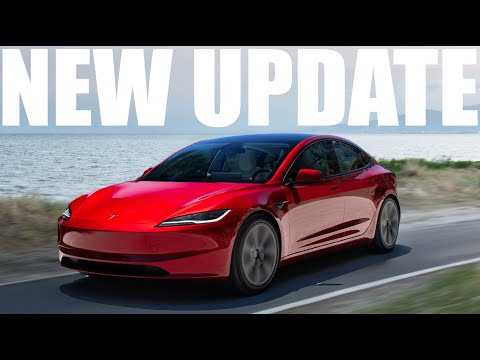
VW, BMW and Mercedes have to revamp their entire lineup every 4 years to stay relevant. Musk just updates software, changes the lights on the Model 3 (Highland) and the world still revolves around him.
€0 for advertising. Nothing. Zero.
Have you ever seen a TV commercial for Tesla during the Champions League final? No. Have you seen a billboard on the highway? Probably not.
Volkswagen, Toyota, BMW… these giants spend billions of euros a year convincing you that their cars are good. They buy advertising space, pay influencers, sponsor football clubs.
“If Volkswagen sold 1.8 million units of a five-year-old Golf without advertising, it would be declared an economic miracle. When Tesla does it, they call it a crisis.”
Tesla invests almost nothing in this. Its “marketing” machine is its users and its controversial CEO. That they manage to sell almost 2 million vehicles in 2025 with virtually no paid advertising, at a time when the competition is spending record amounts to stop them, is an economic absurdity. And proof that the Tesla brand is stronger than any advertising campaign.
Hidden trump card: The ghost in the machine that finally learned the European rules
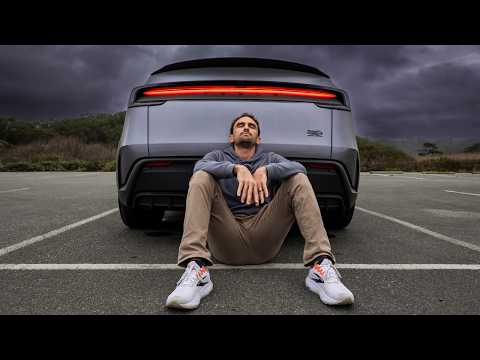
And while analysts are arguing about margins, Tesla is quietly preparing its atomic bomb: Full Self-Driving (FSD), which is finally knocking on Europe's door. For years we have listened to skeptics who say that this is "just a toy for wide American avenues" and that Musk's AI will break down and cry at the first chaotic Italian roundabout or narrow Slovenian village road.
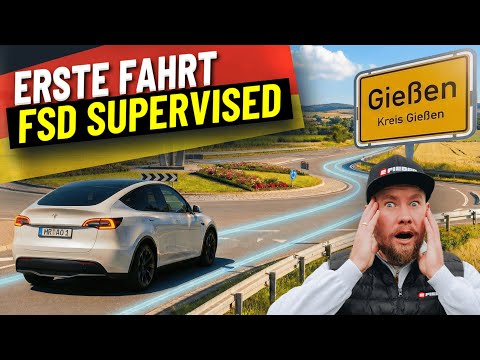
But be careful – 2025 is a turning point. Regulatory barriers are falling, testing on the old continent has officially begun, and most tellingly – demo rides are already availableYes, you read that right. Today you can step into a Tesla showroom and experience a glimpse of the future where a car takes the wheel (still under your control, of course, because the bureaucracy in Brussels never sleeps).
It’s that invisible value that represents the biggest gap between Tesla and the rest. While Volkswagen and BMW sell you better assistance systems that “beep” if you cross the line, Tesla trains neural networks to replace you entirely. If you think that’s irrelevant, remember what the manufacturers of push-button phones thought about touchscreens. FSD is no longer “vaporware,” it’s a reality you can try today – and it’s terrifyingly impressive.
Conclusion: The silence of the victor
So the next time you read a headline that says “Tesla is in trouble,” smile. Yes, they’re not alone anymore. Yes, they are no longer growing at 50 % per year. But the fact that in the most brutal year in the history of motoring, surrounded by enemies, without ads, and with a boss who annoys half the world, they still sell millions of cars at a profit... this is not a crisis.
Don't be fooled by the doomsday headlines. What we're looking at in 2025 is calm before the stormTesla has weathered the toughest year of competition without a scratch on its armor. They've maintained volume, they've maintained margins (which are still higher than most of the industry), and while others are busy selling sheet metal, Tesla is training neural networks for FSD (Full Self-Driving) and Robotaxi in the background.
When they finally introduce a cheaper model in 2026, we'll look back on 2025 and laugh at the analysts who doubted it. And now? Right now, Tesla is like a boxer standing in the middle of the ring, taking blows from all sides but not moving. And that, my dear readers, is the definition of strength.
This is dominance. It's just that it's become so self-evident that no one notices it anymore.

