


We've been waiting for it like children wait for presents, except that this holiday has been postponed for a whole decade. Tesla's Full Self-Driving (FSD) system is a revolution in the US, but a forbidden fruit in Europe. But the ice is finally breaking. With new regulations and testing on European soil, February 2026 looks like the moment when we'll finally hand over the wheel to silicon. Buckle up, we'll analyze the technology, bureaucratic obstacles and that strange feeling when the car knows where you're going better than you do. So - Tesla FSD and Europe.
Let's admit it: most driving is unbearably boring. It's just moving between point A and point B, full of stress, traffic jams and people who got their driver's license hunting permit. Elon Musk has been promising us salvation since 2016: a car that will become our personal chauffeur while we answer emails or simply stare into space. If we were to believe every one of his timelines, our cars should be colonizing Mars by now. But let's look anyway - Tesla FSD and Europe.
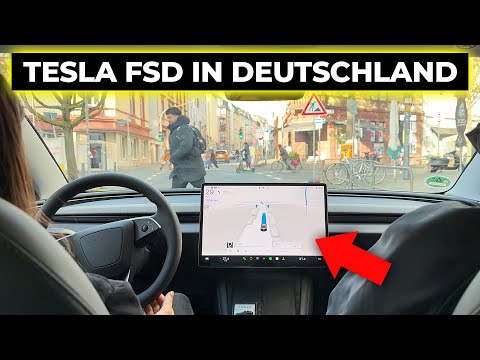
But in December 2025, the story changes drastically. Tesla has launched a program on European roads where cars actually drive themselves – although for now only under the watchful eye of test drivers. Is this finally it? Or is it just another episode in the series “Waiting for Godot” where European regulators play the main role? The answer lies in Dutch offices and American servers.
Bureaucratic Labyrinth: When Silicon Valley Runs into the European Wall
The most important question every Tesla owner on the old continent is not “how does it work”, but “when the hell will I get it”. The current unofficial but very likely date for the green light in Europe is February 2026. Why then? Because all eyes are on the RDW (Dutch Vehicle Agency).
European legislation on autonomy is as strict as a librarian during exams. We are currently hampered by the outdated UNECE R79 regulation, which was written at a time when cruise control technology was at its peak. These rules limit how much a car can turn the steering wheel (lateral acceleration), which means that a Tesla would “legally” have to drive off the road on a sharp bend, rather than crashing into it. Absurd, isn’t it?

The solution is called DCAS (Driver Control Assistance Systems). This is a new regulation that will allow Tesla to unleash the full potential of its technology in Europe. Tesla is trying to use the national exemption process through the Netherlands. If the RDW says “yes” in February 2026, the rest of the EU will probably follow in a domino system. Until then, your FSD is just a very expensive decoration on the screen. So – Tesla FSD and Europe.
The Ghost in the Machine: Why Neural Networks Are Not Just a Marketing Babble
Forget everything you knew about how computers “see.” Old assistance systems worked on “if-then” rules (if you see a line, turn left; if you see red, stop). This is robust, but useless in the chaos of real traffic.
Tesla’s latest FSD (v12.5 and v13) runs on the principle of “end-to-end” neural networks. This is an “Oppenheimer” moment for the automotive industry. Engineers no longer wrote code for each situation individually. Instead, they “fed” a supercomputer millions of hours of video footage of the best human drivers and told it: “Watch and learn.”
The result? The car no longer follows a program code, but “thinks” and interprets its surroundings. It sees a roundabout and navigates it smoothly, it sees a cyclist and safely moves into the opposite lane if it is free. This is the difference between a robot stacking boxes in a factory and an artist improvising. The Hardware 4 (AI4) system, which is built into all new models, processes this data faster than you can say “watch out, deer!”.

Cameras are the eyes of the car, and Tesla is betting on the most logical approach, which can be cheap and mass-produced.
Digital Chauffeur: Is this the end of driving or the beginning of freedom?
What does FSD (Supervised) actually mean for your lifestyle? Imagine a world where driving downtown for dinner is stress-free. The car stops at traffic lights, changes lanes in heavy traffic, and navigates through complex intersections, all while you control it.

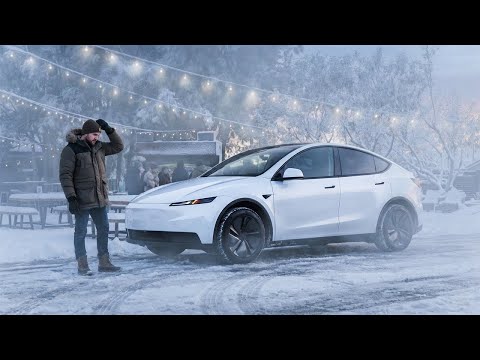
No, you can't sleep behind the wheel or play cards in the back seat just yet. The system is called "supervised" for a reason. An interior camera constantly monitors your eyes. If you look at your phone, the car will first warn you, then "punish" you by turning off the system. It's a strict partnership, not a complete abdication of responsibility. But those who have tried it in the US say that the mental strain of driving is reduced by 90 percent. You arrive fresher, more relaxed and less angry at the world.

Below the line_ 2026 is the year when the profession of chauffeur becomes extinct
We are on the verge of the biggest change in mobility since the invention of the automobile itself. Tesla with FSD, it doesn't just sell a car, it sells time and peace of mind. While Elon Musk's delays are legendary and often frustrating, the experience from The US and current testing in Europe is proofthat the technology works and that it is here.
The price for this glimpse into the future? In Europe, the price is expected to be around 7,500 EUR for the entire package, or around 100 EUR for a monthly subscription. Is that a lot? It depends on how much you value your nerves. Until February 2026, we can only wait and hope that the bureaucrats will understand that they cannot stop the future with paperwork. When that day comes, your car will become more than just a means of transportation – it will become your intelligent companion. And let's be honest: it probably drives better than your neighbor.

