


Everyone is shouting about a revolution. YouTubers are swooning over the charging curves. But let's be honest - when you walk up to this car in person, when you actually see it without studio lights and filters, something unexpected happens. Nothing. Your heart rate stays steady. Instead of being overwhelmed by a sense of German dominance, you are overwhelmed by a strange "déjà vu". Doesn't it all seem a bit too... Peugeot? The BMW iX3 Neue Klasse is a monster on paper, but in reality it may just be proof that "premium" is no longer what it used to be.
Let's face the truth. The BMW iX3 Neue Klasse is having an identity crisis. The iconic kidney grille has been retained at the front, now digitized and compressed, which is a favorite of minimalists. But what about the overall silhouette? It is 4.78 meters long, which is a decent number, but in person the car does not exude the power we are used to from the model. X5 or even the current iX.
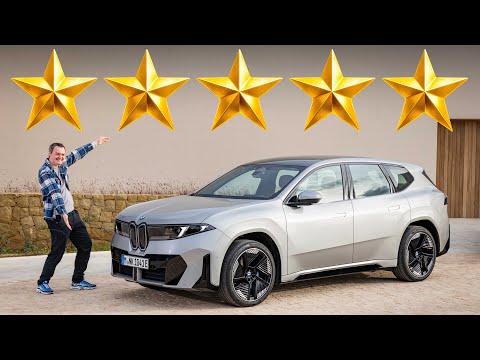
Live it works… generic. If you were to pick up the badges, many would say that this is a new model from a French or even Chinese factory. The taillights? A strange interpretation of 3D elements, more reminiscent of an experiment than a timeless design. And then there's that feeling. You know what I'm talking about. When you approach a real BMW, you expect the car to "stand" on the road with authority. iX3 and it stands there as if apologizing for taking up space.


Interior: Is it sustainability or cost-saving?
This is where the “Peugeot effect” is most evident. Remember the French i-Cockpit: small steering wheel, screens far below the windshield, strange ergonomics. BMW did something suspiciously similar with the Panoramic Vision system. The screen across the entire width of the windshield is technically impressive, but the entire architecture of the dashboard feels empty.


“Materials? If you call them ‘sustainable’, they sound noble. If you touch them, they sound cheap.”
The doors. The part you grab every time you get in and out. The hard plastic on the lower part of a car that aims to cost over 80,000 euros (with equipment) is an insult. The absence of buttons is not progress, it is cheaper production. And the steering wheel? The shape is a matter of taste, but this “double-cut” rim in the hands does not give that meaty, sporty feeling that has defined BMW for the last 40 years. The feeling is light, toy-like. As if you were driving a simulator, not two tons of steel and aluminum.

Numbers don't lie (unlike feelings)
If we leave aside the subjective disappointment with the materials, the engineering beneath the “expensive” plastic is top-notch. BMW didn’t skimp here.
- Battery: A whopping 109 kWh (net). That's a power reserve that finally silences those who fear being stranded on the road with a dead battery.
- Drivetrain: Two engines, four-wheel drive, 345 kW (469 hp) and 645 Nm (476 lb-ft) of torque.
- Performance: Acceleration to 100 km/h is powerful (data says around 4 seconds), and the top speed is 210 km/h (130 mph).
But you know what? In a straight line, every electric car is fast these days. Even the ones you order through Alibaba. The essence of BMW should be in the corners. The “Heart of Joy” system (who the hell comes up with these names?) promises wonders in stability control and damping. And indeed, it drives beautifully. Comfortably. But does it drive like the “Ultimate Driving Machine”? Or does it just drive like a very competent but sterile electric appliance? Without air suspension, on bad roads it feels like it’s not the level of the iX model.

Charging: The Only Thing That's Truly "Premium"
If anything, the iX3 deserves a round of applause at the charging station. The 800-volt architecture is the real deal. With a charging power of up to 350 kW (or 400 kW theoretically), this car beats most of the competition. 10 % to 80 % in 20 minutes.


That's fantastic. But the irony is that you'll spend those 20 minutes inside, tapping the hard plastic on the doors and wondering why you didn't buy a used X5 with a V8 engine and real leather. And a word of warning: the first models will only have 11 kW of AC charging. You'll have to wait or pay extra for 22 kW. Saving wherever possible.
👍 WHAT TO BRAG ABOUT (Technology and Engineering)
-
Charging Monster (800V Architecture): This is by far the strongest point. Tip charging via 300 kW and an incredibly flat charging curve. From 10 to 80 % in approx. 20 minutes it is currently in the very top of the world.
-
“Heart of Joy” dynamics: A new chassis and drive control system that prevents “nodding” when braking (stops completely softly with recuperation) and processes wheel slippage incredibly quickly.
-
Drive efficiency: Despite the SUV shape, fuel consumption on the highway (at 130 km/h) is surprisingly low (approx. 23 kWh/100km), which allows for a realistic highway range of close to 470 km.
-
Panoramic Vision Display: The new display under the windshield is perfectly readable, replaces classic gauges and offers superior resolution without glare.
-
Spaciousness: Despite being shorter than the iX, it offers a huge amount of rear legroom (“foot garage”) and a decent trunk (520 l) + a useful “frunk” (58 l).
-
Assistance systems: Autonomous driving (Highway Assist Plus) works superbly, changes lanes quickly and reliably, and the environment recognition system is on par with Tesla or better.
-
Software (UI/UX): Fast responsiveness, logical menus (finally simplified in Tesla style) and excellent integration of charging into navigation.
👎 WHAT IS BEING BUILT (Feelings, Materials and Savings)
-
“Peugeot syndrome” inside: As you mentioned – minimalism has gone too far. The dashboard feels empty, there are no physical buttons, the steering wheel is oddly shaped and feels “toy-like”. The whole ambience doesn’t exude the weight and prestige you’d expect for €85,000.
-
Expensive materials in critical places: A lot of criticism is directed at hard plastic on the lower part of the doors and pillars. The feel and sound when touched are not at the premium class level (worse than the old X3).
-
The death of the iDrive controller: The elimination of the legendary rotary knob is an unforgivable mistake for many BMW purists. Everything is controlled by “tapping” on the screen.

-
Absence of air suspension: In this price range and at this weight (battery included!) it is obvious that the car does not have air suspension. On poor roads it is harder and less comfortable than the larger iX.
-
Wind noise: Despite good aerodynamics (Cd 0.25), at highway speeds, a gust of wind can be heard around the A-pillars, which spoils the “premium” silence.
-
Voice assistant: The system is overly sensitive and constantly listening. If you mention the word “BMW” in a conversation, it interrupts you.
-
Ergomic flowers: The vents are adjusted digitally (left-right on the screen, up-down manually), there are no buttons in the trunk to fold the seats (you have to pull the loop like in the 90s).
-
AC charging (First series): If you order a car among the first, you only get 11 kW AC charger. For 22 kW, we will have to wait for later production (March/April).

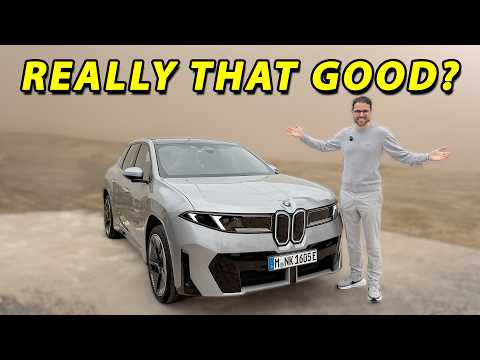
Conclusion: The BMW iX3 Neue Klasse is a good car, but a lost soul?
BMW iX3 New Class is a victim of its own ambitious turnaround. The engineers did a great job – the drivetrain, battery and software are top-notch. But the accountants and interior designers let it down. The car simply doesn’t have the “premium” feel that would justify the €68,900 price tag for the entry-level model, which quickly rises to €85,000+. In person, it feels too sterile, too plasticky and, yes, too much like the ready-made stuff offered by brands that cost half as much.
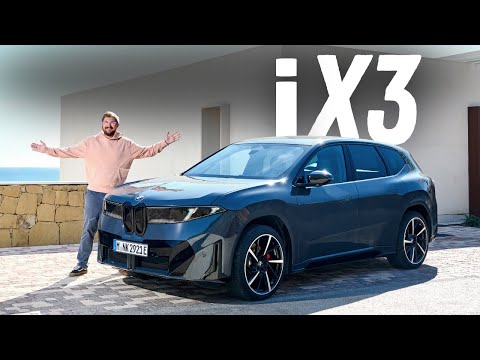
If you're looking for technological sophistication and don't care about the feel of materials, this is the machine for you. But if you're expecting that heavy, expensive, rich feeling from a BMW when you close the door and grab the steering wheel... you might be disappointed. This is a great electric car. But is it a great BMW? I highly doubt it.

