


If you thought the height of Toyota excitement was the moment you managed to connect your phone to Bluetooth in the Yaris, you'd be wrong. The Gazoo Racing offices have apparently locked the doors, turned off the phones, and created something that has nothing to do with the 'safe choice'. The Toyota GR GT is the spiritual successor to the LFA, except this time it doesn't scream, it roars.
Let's be honest. Toyota is a brand you buy with your head, not your heart. You buy it because you know it will still be on in 20 years, when all the other cars have been recycled into drink cans. But every now and then, a “short circuit” occurs in this corporation. That’s when legends like the 2000GT or the unforgettable Lexus LFA are born. And now it’s before us Toyota GR GT.
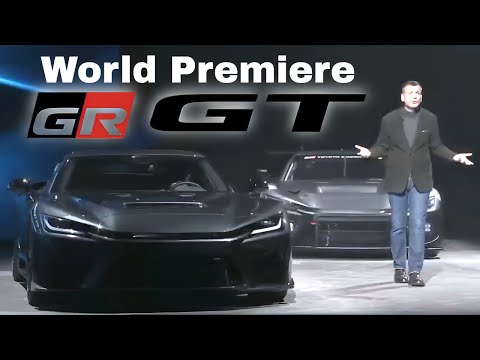
The Japanese say it's a "road-legal race car." Normally, we'd roll our eyes at such a statement, saying it's just about stiffer suspension and red stitching on the seats. But this time the numbers are on the table, and believe me, they don't lie.

The Holy Grail of Engineers: Low, Stiff, and Light
The point of this car isn't touchscreens or ambient lighting. The essence is three engineering commandments: the center of gravity must be absurdly low, the chassis rigid as granite, and the weight… well, let’s call it “athletic.” The result is a car that stands on the road so confidently that the neighbor’s 911 suddenly looks like a family station wagon.
There's no frugal mill hidden under the long bonnet. It houses a completely newly developed V8 engine with twin turbochargers, assisted by a single electric motor in the transaxle gearbox.


A hybrid that's not here to save the planet
Yes, it's a hybrid. But not the kind that would appease environmentalists' consciences. Electricity is here for one purpose: to fill that millisecond before the turbines grab the air and launch you into the horizon. "Torque-fill," as we experts call it.
We are talking about a target power of at least 477 kW (640 hp) and 850 Nm (627 lb-ft) of torque. All of that brute force goes exclusively to the rear wheels via an eight-speed automatic transmission. And mind you, Toyota says these are minimum numbers for the prototype. The production model will likely be even more powerful. It's that typical Japanese philosophy: promise less, deliver more.

Aluminum diet and the hunt for pounds
They've targeted a weight of under 1,750 kg (3,858 lbs). This was achieved by using an all-aluminum frame for the first time at Toyota, and the bodywork is a mix of carbon and aluminum. That may sound like a lot compared to a Lotus, but in the world of modern GTs, it's a respectable figure. For comparison: the Corvette E-Ray hybrid is heavier, while the Porsche 911 GTS is lighter but lacks those crucial 100+ horsepower that the GR GT brings to the party.


Because that kind of weight and power doesn't stop on its own, they've installed massive carbon-ceramic brakes. Michelin Pilot Sport Cup 2 tires keep things in touch with reality. At the rear, they're a whopping 325 mm wide. This isn't a tire anymore, it's a roller.
Design: Below your expectations (literally)
The design? Fantastic. The car is low, just 119 cm (47 inches) high. The roofline is pulled so low that the car looks fast before it even moves. The dash-to-axle ratio is extreme, giving it that classic GT profile that we miss so much these days. The nose of the car still carries Toyota's design DNA, but in a way that feels almost cartoonishly aggressive. And I mean that in the best possible way.


The interior is a story in itself. Forget the Toyota badges. GR reigns supreme here. The seats are carbon-fibre Recaro, the cockpit wraps around the driver. The feel is much more “Lexus” than “Toyota”, meaning premium materials and a finish that doesn’t fall apart when you look at it.
And why all this? Because the car was developed in parallel with the GR GT3 race car. This is not a marketing gimmick. The suspension, the engine, the architecture – it shares all this with the machine that will roar along the tracks of Le Mans and the Nürburgring.

Below the line_ A car for those who know
Toyota GR The GT is not a car for everyone. It's not for those who buy a car as a status symbol to park in front of the local bar. It's a machine for drivers. For those who understand what it means to have a V8 biturbo engine connected to the rear wheels in an age when everyone is forced into silent electrical boxes.
The price will certainly be high, probably somewhere in the stratosphere where supercars live. But considering what it offers – exclusivity, technology and probably the last chance for a new Japanese V8 – this is a future classic.
With this model, Toyota has proven that despite its size and corporate rigidity, it can still make a car that makes your pulse race. It's not a rational purchase. It's an emotion. And in the world of motoring, emotion is the only currency that really counts.

