


Remember the first ID.3? It promised a revolution, but delivered with an interior made from recycled yogurt cups and buggy software. Well, Volkswagen has finally listened to us. They're introducing the all-new Volkswagen ID.3 Neo. Is this the real, genuine electric Golf for the masses we've been waiting for all these years?
Let's face the truth. Volkswagen Golf has defined the hatchback class for decades. It was a car for everyone – from the ambitious student to the moderately successful branch manager. When the ID.3 first hit the market, it was supposed to be the brand’s “third big milestone”, right after the legendary Beetle and Golf. But somehow it missed the point. It was sterile, too futuristic and, let’s be honest, a bit unfinished. Now, here we have Volkswagen ID.3 NeoThe word “Neo” of course means new, and thank the automotive gods that it is true in this case. The design language, which VW calls Pure Positive under the leadership of designer Andreas Mindt, is not just a cheap marketing ploy. The car now has real, sharp and dynamic features, a continuous light line on the nose that gives it a more aggressive width, and an elegantly illuminated logo. The roof, rear spoiler and trunk lid are now painted in the body color, which makes the car look optically no longer like a bloated smart tablet on wheels, but like a real, dynamic, lower and longer special.


Interior – Volkswagen ID.3 Neo: The end of the era of despair and touch
The most cynical among us have often laughed in the past when trying to operate the air conditioning in the dark. In the ID.3 Neo, however, the door has opened to a completely new world, which once again proudly bears the “100% Volkswagen” label. The materials in the interior are soft, incredibly high-quality and pleasant to the touch – they belong directly to the next higher class. The multifunction steering wheel has also been completely redesigned, and is now sporty and flattened at the top and bottom. And what is even more important: it has completely logical, physically tangible buttons and switches. Gone are the unpredictable sliders that only worked if you asked them with your knees. The center of the technological action is a massive and responsive 32.8 cm (12.9-inch) central display, which is complemented by the extremely clear 26.0 cm (10.25-inch) Digital Cockpit in front of the driver. And the software? The latter now finally works smoothly, fluidly and completely without lag. Martin Sander, Member of the Board of Management for Sales and Marketing at VW, said at the presentation: “We developed the new model with the 'Real Volkswagen' in mind and put the user first and foremost.” In practice, this means simple intuitiveness, without stress in everyday tasks.


Numbers that really count: Batteries and raw power
This is where things get really interesting and important for anyone who likes to drive dynamically. The drivetrain in the new model has been developed from scratch. It offers more torque – we estimate at least around 310 Nm (228 lb-ft) for the base and mid-size models – and significantly reduced energy consumption. There are three equipment packages (Trend, Life and Style) and three performance versions of the electric motors. It starts with the base version, which sends 125 kW (170 PS / 168 hp) to the wheels and is equipped with a large 50 kWh battery (net). The mid-range option brings an improved 140 kW (190 PS / 188 hp) and a 58 kWh battery. For those who want to surprise many a driver in the fast lane with a classic engine, the most impressive version is available: 170 kW (231 PS / 228 hp) in combination with a hefty 79 kWh battery.


The latter, the largest battery, thanks to improved aerodynamics and engines, enables a fantastic range of up to an incredible 630 kilometers (391 miles) according to the strict WLTP standard. What about charging on long journeys? The smaller batteries (50 and 58 kWh) are charged at fast DC chargers with a power of up to 105 kW, which remains very solid in the long run and with a suitable curve. The real star of the pack is the 79 kWh version, which sucks in valuable electricity with a power of up to 183 kW. The top speed remains sensible and safe, so it is traditionally electronically limited to 160 km/h (99 mph). Acceleration from standstill to a hundred (0-100 km/h or 0-62 mph) for the most powerful 170 kW version is estimated at an extremely lively 6.0 seconds, which will definitely keep you glued to your seat every time you start from a traffic light.
Volkswagen ID.3 Neo: Technological goodies and ultimate usability
The new ID.3 Neo is literally packed with smart technology. There's the upgraded Connected Travel Assist system, which recognizes traffic lights flawlessly, and the excellent one-pedal driving, where the vehicle regenerates energy powerfully and brakes to a smooth stop. But my absolute favorite addition is the standard Vehicle-to-Load (V2L) function with an impressive output of up to 3.6 kW. In practice, this means that you can connect an electric grill to your car somewhere in nature, charge a fleet of electric bikes or power a coffee machine. There's even an innovative integrated app store (In-Car Shop) that lets you load streaming content, games or charging apps into the car.

For those who want more luxury, the list of optional extras includes augmented reality on a translucent Head-up Display (AR HUD), a huge panoramic sunroof, a premium Harman Kardon surround sound system and massage seats with memory function. The Park Assist Pro system is now smarter than ever and remembers your maneuvers.
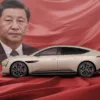
So, what's the final verdict on the all-new car from Wolfsburg?
To be completely honest and perhaps a little cynical – this is exactly what the ID.3 should have been like when it was first introduced. Engineers and designers have finally gotten rid of those annoying, cheap-feeling cabin feelings, significantly improved the overall ergonomics and installed a powertrain that offers real, tangible and reliable usability for the everyday driver. With an impressive 630 kilometers of electric range, you will definitely no longer be plagued by that familiar anxiety about a dead battery on longer distances.

Although the official prices for today's world premiere have not yet been 100% confirmed for each individual market, we can realistically expect these numbers to range somewhere between when pre-sales begin. 35,000 euros for the very basic “Trend” model and all the way to the rich 48,000 euros for the version with the largest battery and full equipment. Is that a lot of money for a modern hatchback? No doubt. But in today's world, where electric cars often act as nothing more than soulless smart devices on wheels, it is ID.3 The Neo has finally become a car again. It has transcended that sterility and offered a real experience that you enjoy just driving. It now, and for the first time, deserves the “electric Golf” badge completely without a hint of irony. Personally, I think we can all forgive it for its past teenage mistakes, because it has clearly successfully graduated from the university of real motoring.